
What Should a Cleaning Business Bookkeeper Do Monthly?

- Michael Pirumov
A cleaning business bookkeeper should do more than import and categorize bank transactions. Every month, the bookkeeper should confirm that every active financial account is included, reconcile the books to bank and credit-card statements, review payment-processor deposits, correct unclear or inconsistent categories, and verify important balance-sheet accounts.
The finished work should tell the owner what the business made, spent, and kept. It should also explain why profit and cash changed, identify changes that do not match historical patterns or remain unresolved, and arrive soon enough to help the owner run the business.
For a straightforward cash-basis cleaning company, this can be organized into eight monthly responsibilities.
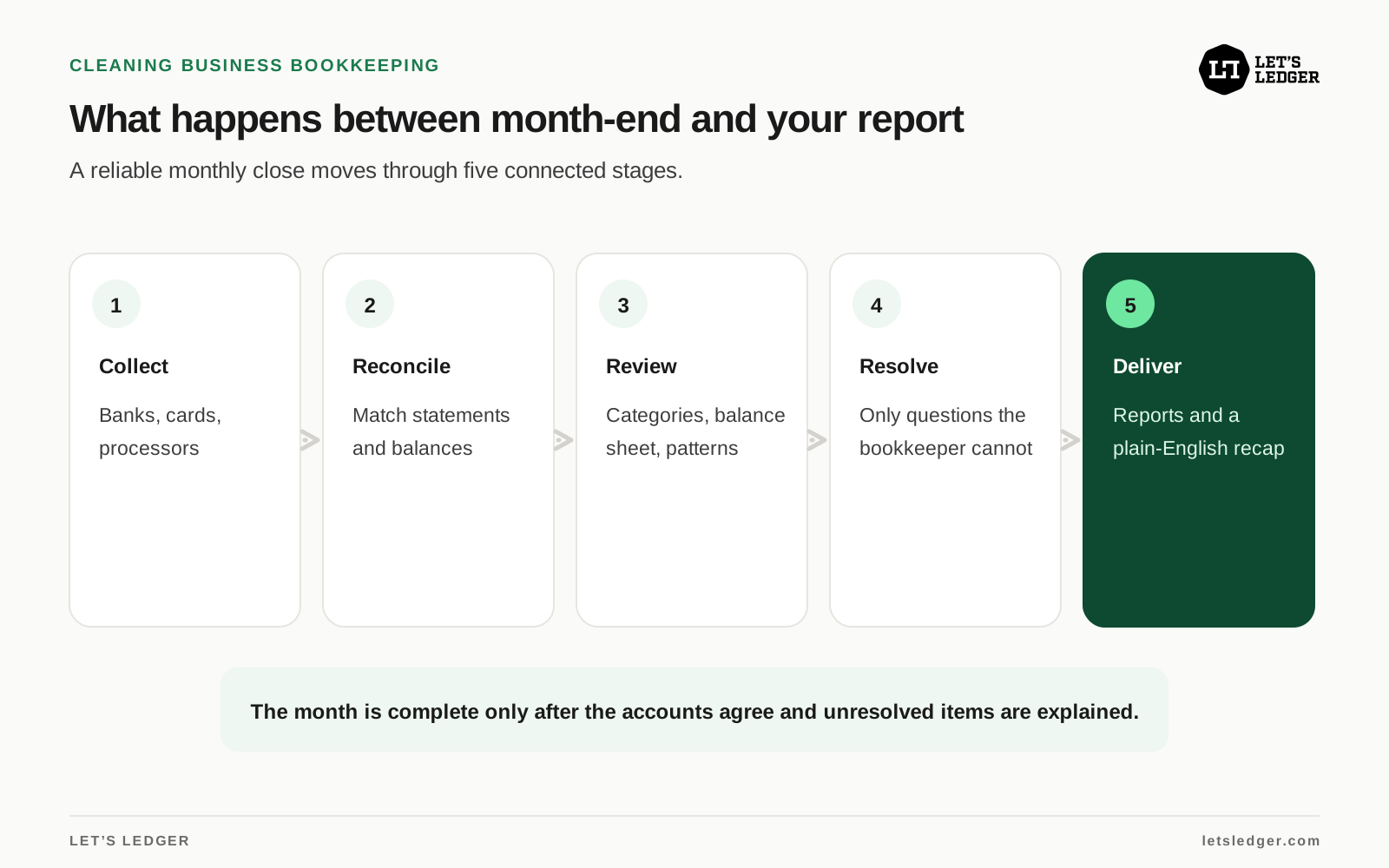
1. Confirm that every account and source of activity is included
The bookkeeper should begin by confirming that the accounting system includes every active business checking account, savings account, credit card, loan, and payment processor.
That matters because a perfectly reconciled checking account still produces incomplete books if a business credit card or a second bank account was left out. The same problem occurs when business purchases made on a personal card are never reported.
The bookkeeper should also identify how the cleaning company collects money. Common sources may include card payments, ACH transfers, checks, cash, Venmo, Zelle, Stripe, Square, or payments initiated through scheduling and invoicing software. The accounting records need a complete path from those source systems to the deposits that reach the bank.
2. Reconcile every bank and credit-card account
A reconciled account means the transactions and ending balance in the accounting system agree with the statement issued by the bank or credit-card company for the same period.
A bank feed is the automated connection that imports transaction activity from a bank or credit-card provider into the accounting system. It can look current while the books still contain a duplicate, omit a transaction, use the wrong opening balance, or include an item that never cleared. Imported activity must still be compared with the statement for the month.
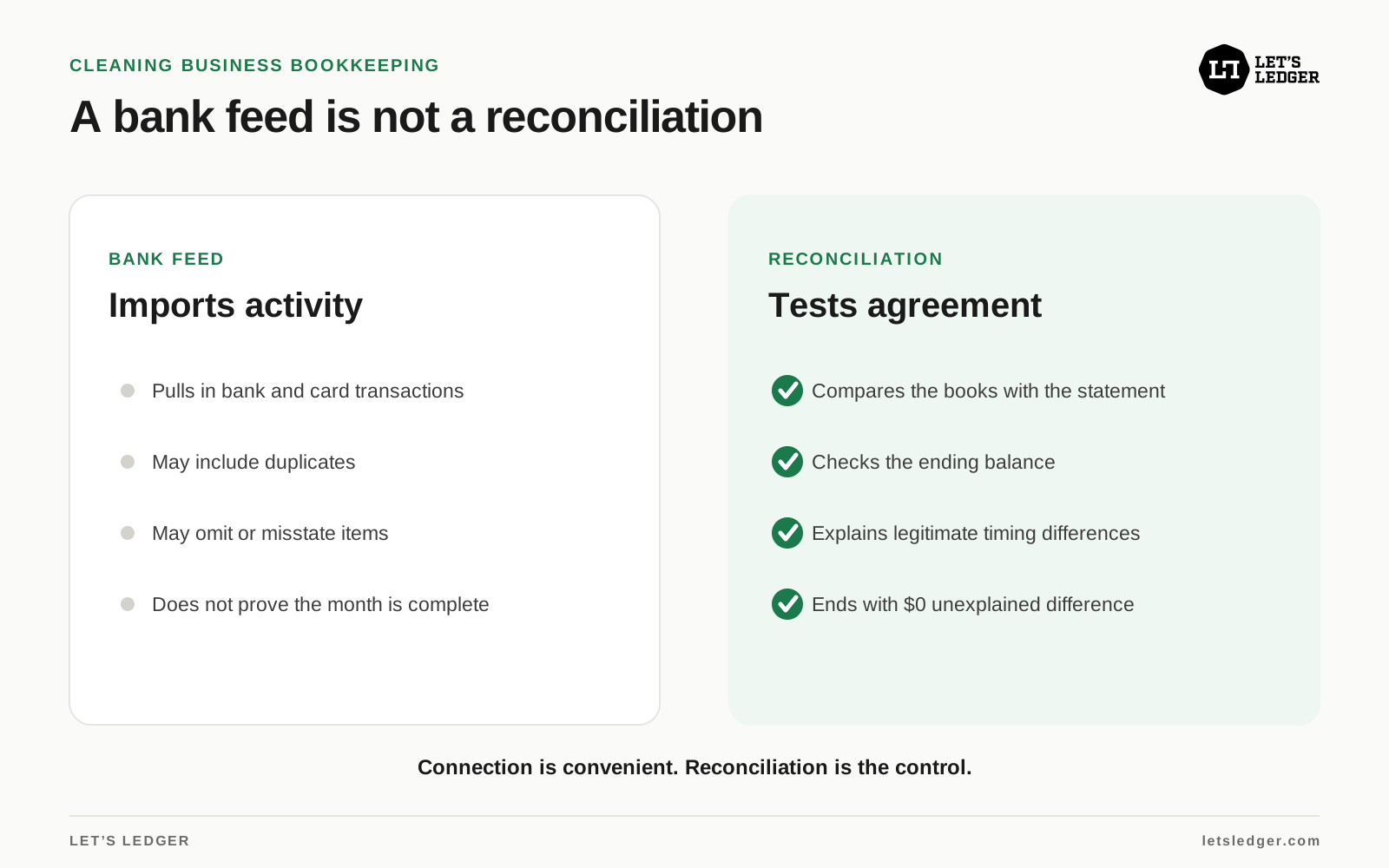
The monthly reconciliation should end with a zero unexplained difference. If a legitimate timing item exists, such as an outstanding check, the bookkeeper should be able to identify and explain it.
3. Reconcile payment-processor deposits to gross sales
A payment-processor deposit is usually not the same as revenue.
Suppose customers paid a cleaning company $10,000 by card, including $100 of sales tax, and the processor withheld $300 in fees. The bank would show a deposit of $9,700. Recording that deposit as revenue would hide the processing expense, understate sales revenue, and fail to record the $100 owed to the state. The books should show:
- Gross customer payments: $10,000
- Sales revenue: $9,900
- Processing fees: $300
- Sales tax collected: $100
- Net amount deposited: $9,700
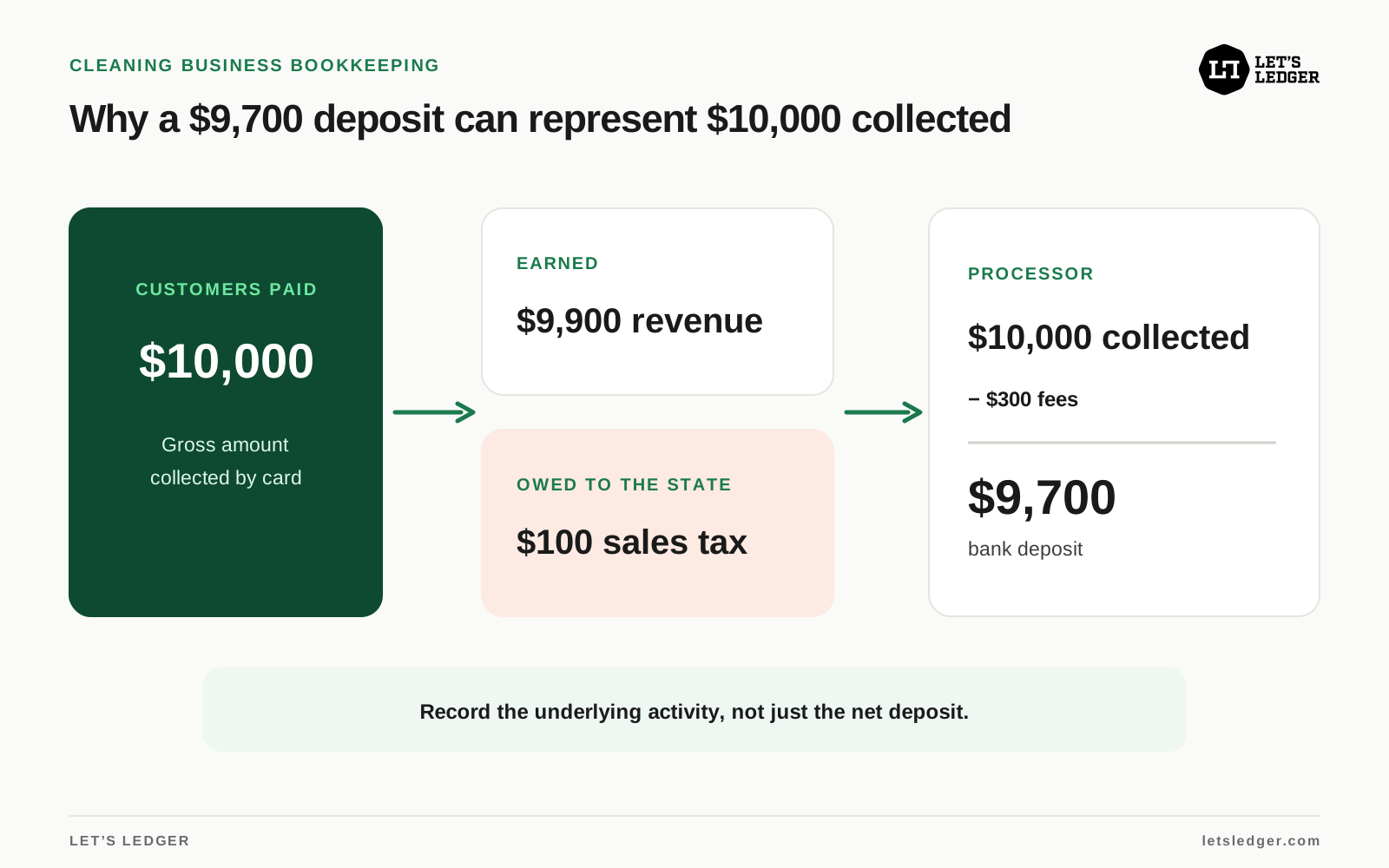
The processor deposit includes money collected for two different purposes: $9,900 earned by the business and $100 collected for the state. After the $300 processing fee, $9,700 reaches the bank. Refunds, disputes, chargebacks, processor software fees, and unsettled amounts can further change a payout, so the bookkeeper should use the processor's reconciliation report to explain how the underlying activity became the bank deposit.
Stripe, for example, provides payout-reconciliation reports that separate gross activity, fees, and net payouts.
4. Categorize transactions in a way that explains the cleaning business
Consistent categories are not merely a tax-season convenience. They determine whether the owner can understand how the cleaning operation performed.
At a minimum, a cleaning company's records should distinguish:
- Technician wages or contractor labor from office and administrative payroll
- Cleaning supplies used to deliver services from office supplies
- Field contractors from marketing, technology, or administrative contractors
- Payment-processing fees from software subscriptions
- Routine supplies and small tools from larger equipment purchases
- Advertising and sales costs from general administrative expenses
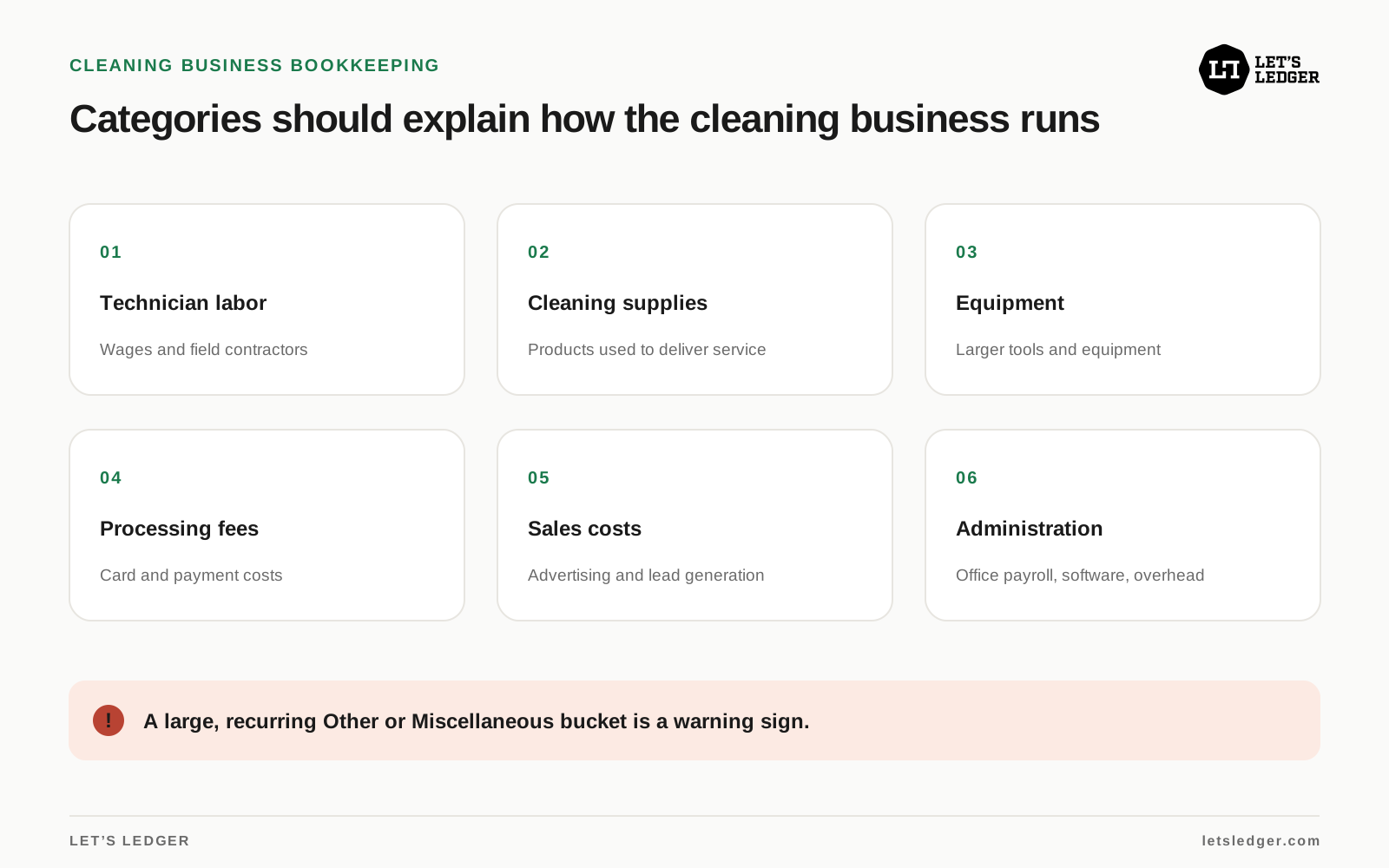
The chart of accounts, the organized list of categories used to build the financial statements, should fit the business. A cleaning company may reasonably use 20 to 30 categories. The goal is not to force the list below an arbitrary number. It is to create enough separation to explain the business without creating categories so narrow that they are never useful.
A large Other or Miscellaneous category is a warning sign. When transactions repeatedly end up there, it often means the bookkeeper is not researching what they actually represent.
Suppose a cleaning company spends $18,000 on payroll, but technician wages and office payroll are combined in one category. Total profit may still be correct, but the owner cannot see how much payroll directly supported cleaning work versus running the office. Separating the two makes changes in service-delivery costs easier to identify.
Detailed profitability by client, crew, or job requires information from scheduling, time-tracking, and service systems. It is not automatically produced by ordinary bookkeeping.
5. Separate transfers, owner activity, debt payments, and taxes from operating results
Not every movement in a bank account is revenue or an expense.
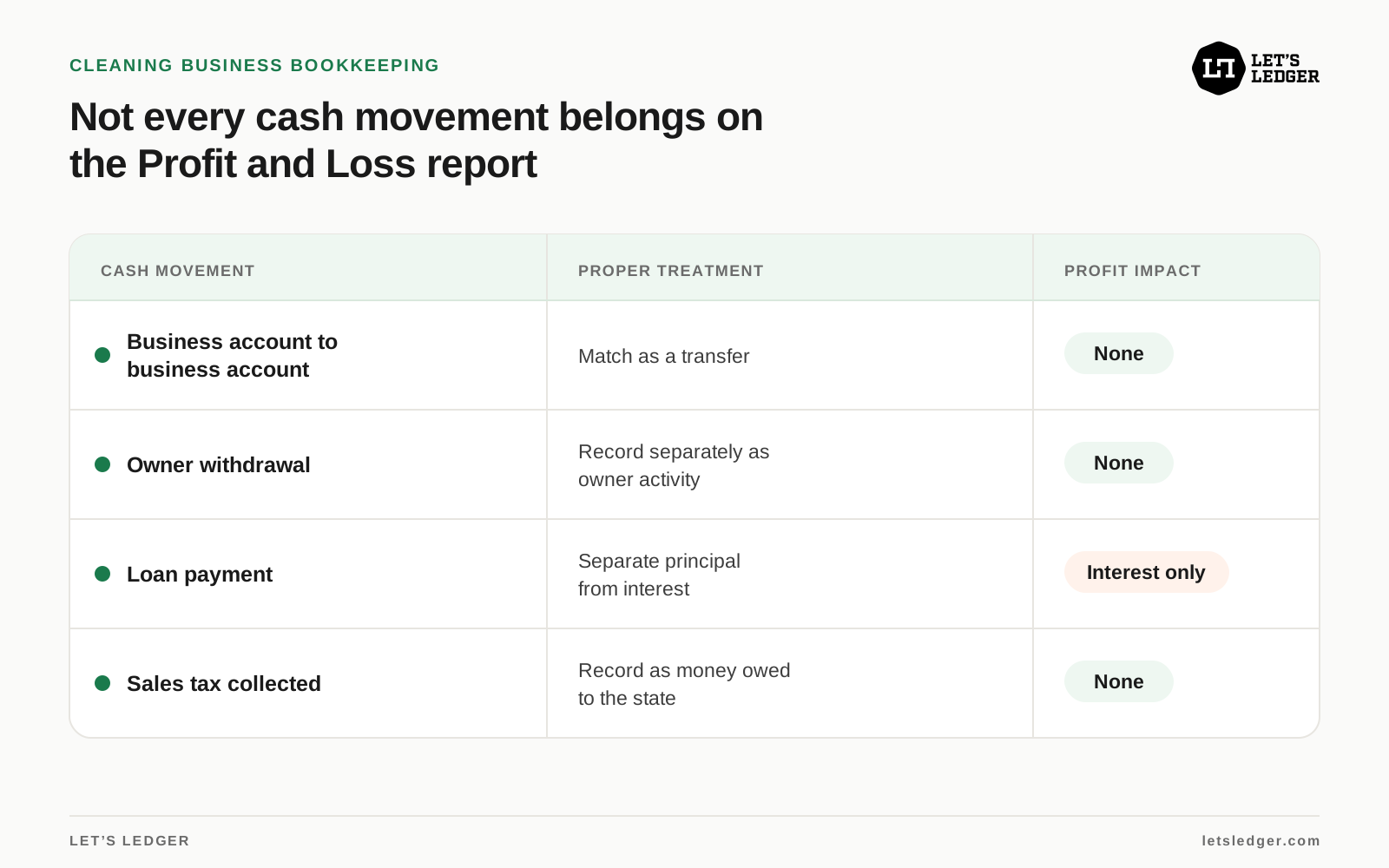
A transfer between two business accounts should be matched as a transfer. An owner's withdrawal should be recorded separately from operating expenses. If it is buried there, profit appears lower than it really is and the owner cannot see how much cash left the business for personal use. A loan payment may need to be divided between principal and interest. Sales tax collected from customers may be money owed to the state rather than revenue.
Getting these items wrong distorts both the Profit and Loss report and the balance sheet. Revenue or expenses may appear higher than they are, while loan, owner, and sales-tax balances stop agreeing with the records that support them.
Misclassifying a balance-sheet item as an expense can also make net income look lower than it is. If a tax preparer uses those reports to estimate tax payments, the owner may underestimate the amount due during the year and face a larger balance later.
The correct treatment of owner compensation and certain tax items depends on the company's legal and tax structure. A bookkeeper should keep the records organized, but the owner should involve a qualified tax professional when tax treatment or payroll requirements are unclear.
6. Review and support the balance sheet
Reconciliation does not stop with cash.
The bookkeeper should compare important balance-sheet amounts with the statements, processor reports, loan records, or other documents that prove what those balances should be. For a straightforward cash-basis cleaning company, the important balances may include:
- Bank and credit-card accounts
- Payment-processor clearing balances
- Loans
- Sales-tax liabilities
- Owner contributions and withdrawals
- Accounts receivable, when the company uses accrual accounting. A cash-basis company may still track unpaid commercial invoices operationally, even though they are not recorded as revenue until payment is received.
A useful workpaper explains how a balance changed: opening balance, plus and minus the month's activity, equals the ending balance. The exact support differs by account, but the bookkeeper should be able to explain what the number represents and why it is reasonable.
This is where many serious errors hide. A Profit and Loss report can look reasonable at first glance while the balance sheet contains old credit-card balances, unexplained negative accounts, duplicate loans, or owner withdrawals recorded in the wrong place.
Suppose the books show a $4,200 credit-card balance while the latest statement shows only $800. The difference could mean that credit-card payments were recorded as expenses instead of reductions of the card balance, transactions were duplicated, or a balance from a closed card was carried forward. The Profit and Loss report could still look reasonable at first glance and would not reveal that problem.
7. Review changes that do not match historical patterns
Once the accounts are reconciled and the balance sheet is supported, the bookkeeper should compare the current month with prior periods.
This review is often called fluctuation analysis. In plain English, it means checking whether revenue and expenses rose or fell in ways that match historical patterns and known changes in the business, then researching increases, decreases, or reversals that do not.
For a cleaning company, useful questions might include:
- Did revenue increase or decrease materially from the prior month?
- Did technician labor move in the same direction as revenue?
- Did supply spending rise sharply compared with prior months?
- Did processing fees remain reasonable compared with card revenue?
- Did owner withdrawals increase or decrease significantly?
- Did a one-time equipment purchase or annual insurance payment explain an expense increase?
The bookkeeper does not need to invent a story for every movement in every account. The goal is to catch mistakes and explain increases or decreases that are large enough to affect how the owner understands the business.
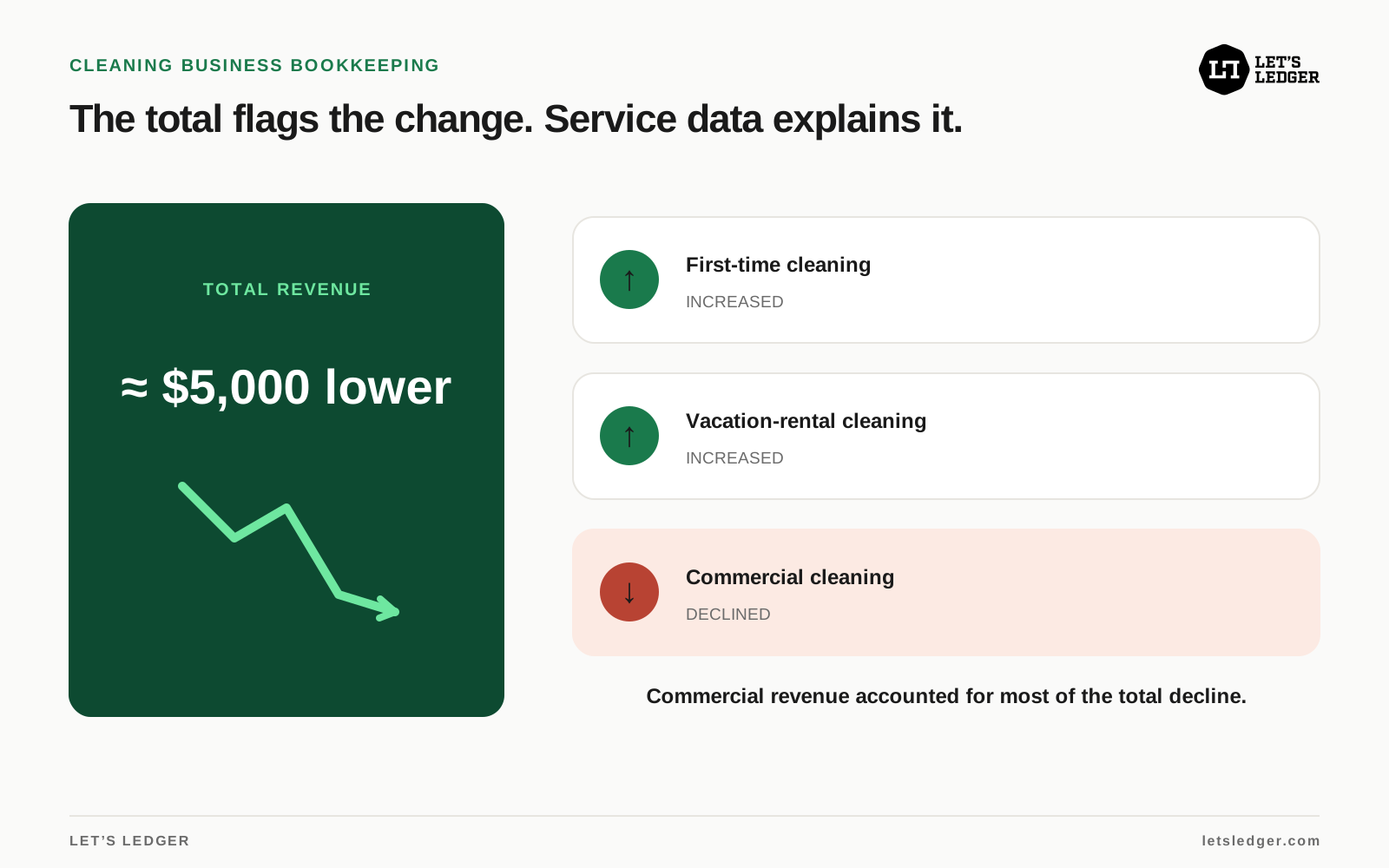
More detailed operational analysis may require data outside the books. An episode of Filthy Rich Cleaners shows why that matters. Serene Clean's total revenue fell by roughly $5,000 from one month to the next. Revenue separated by service type showed that first-time and vacation-rental cleaning had increased, while commercial revenue accounted for most of the decline. Total revenue identified the problem. Structured service data explained it.
8. Resolve questions, close the month, and deliver useful reports
A competent bookkeeper should not leave a growing list of uncategorized transactions in the file and call the books complete.
Anything unclear should be researched first. Questions for the owner should be short, specific, and limited to items the bookkeeper cannot resolve independently, such as a wire transfer that does not match prior activity, a purchase with no usable description, a missing loan document, or a receipt needed to separate a mixed purchase.
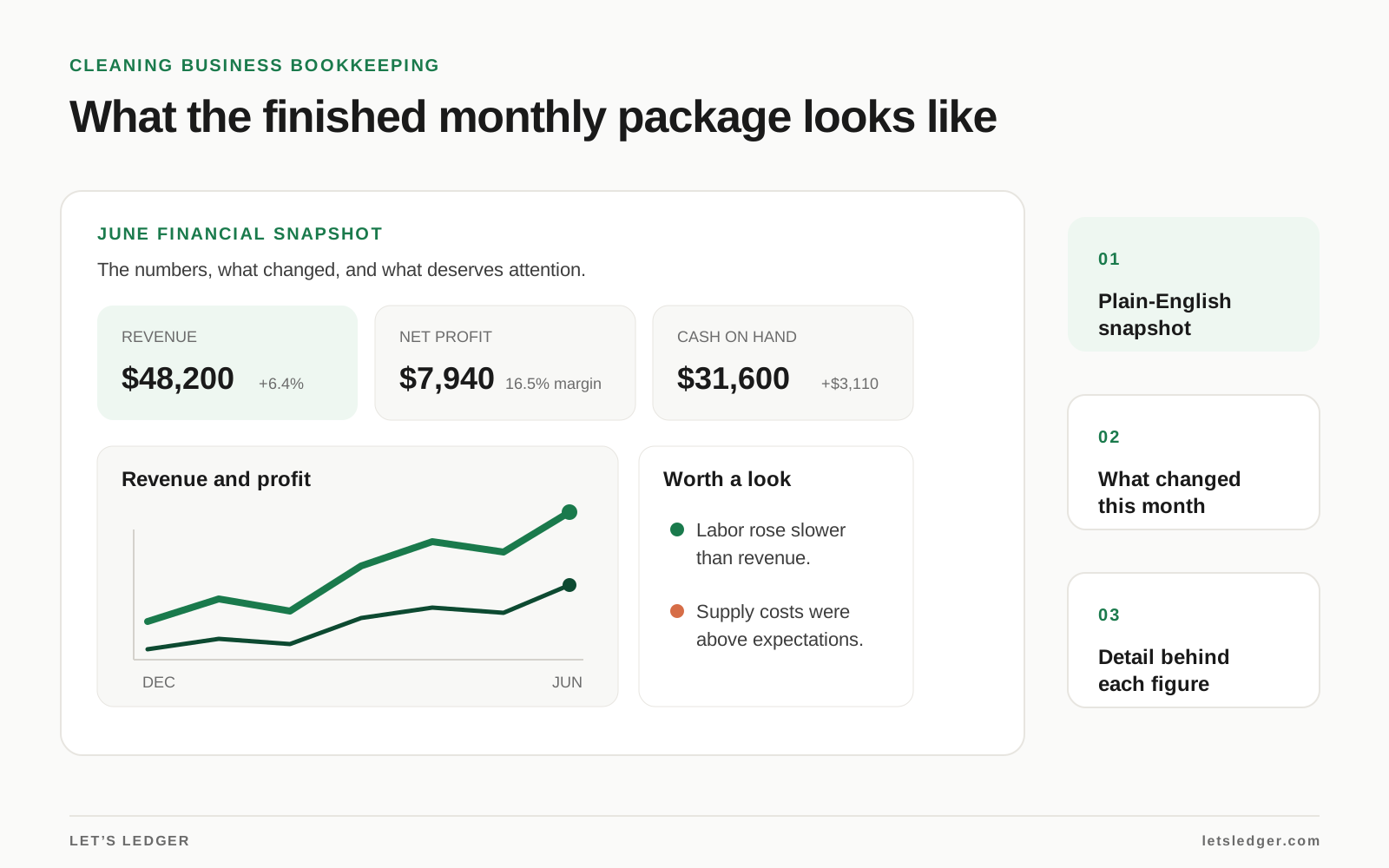
Once those items are resolved, the owner should receive more than a raw export from accounting software. A useful monthly package normally includes:
- A Profit and Loss report
- A balance sheet or an easier cash-reconciliation view
- A plain-English recap of revenue, expenses, profit, cash, and owner withdrawals
- Comparisons with the prior month and year to date, when useful
- One or two observations about what changed or stood out
- A clear note about anything still unresolved
Let’s Ledger delivers the completed monthly package by the 10th. If a company needs faster reporting, an earlier close by the 5th is available.
What the monthly reports should answer
Monthly bookkeeping is complete only when the owner can get reliable answers to basic financial questions:
- How much revenue did the business generate?
- What were the largest and most important expenses?
- How much profit did the business earn?
- How much cash is available?
- How much did the owner take out of the business?
- What changed from the prior month?
- Is anything missing, unresolved, or inconsistent with prior periods?
Accounting should not simply document the past. It should produce trustworthy information quickly enough to help the owner understand the business.
Why profit and cash are not the same
Consider this hypothetical month:
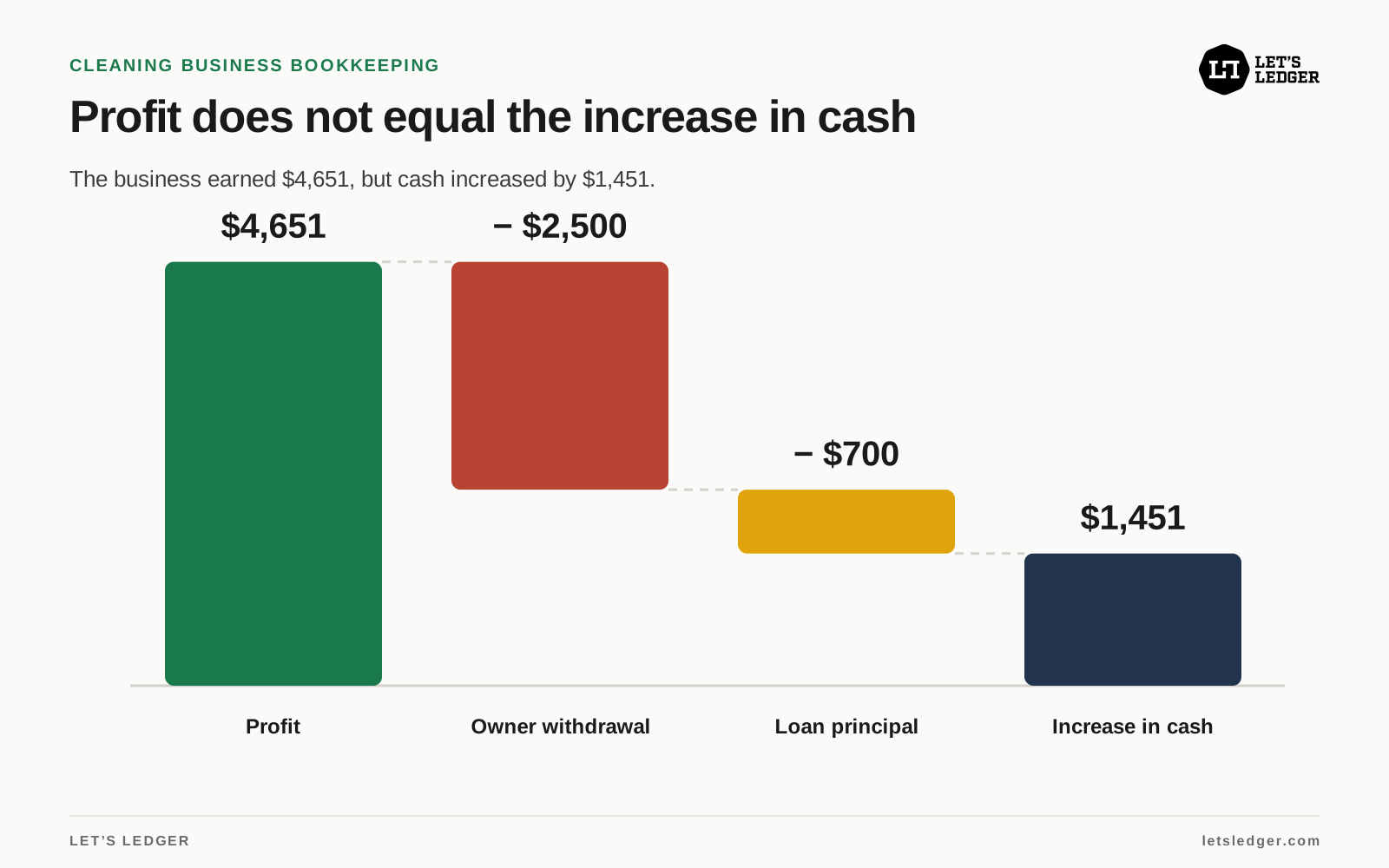
- Profit: $4,651
- Owner withdrawal: $2,500
- Loan principal repaid: $700
- Increase in cash: $1,451
The business earned $4,651 of profit, but the bank balance increased by only $1,451 because $3,200 of cash went toward an owner withdrawal and loan principal.
Neither item necessarily reduces profit in the same way as an ordinary operating expense. Without a cash reconciliation, the owner may incorrectly assume the Profit and Loss report is wrong or that money is missing.
How to verify that the books are actually current
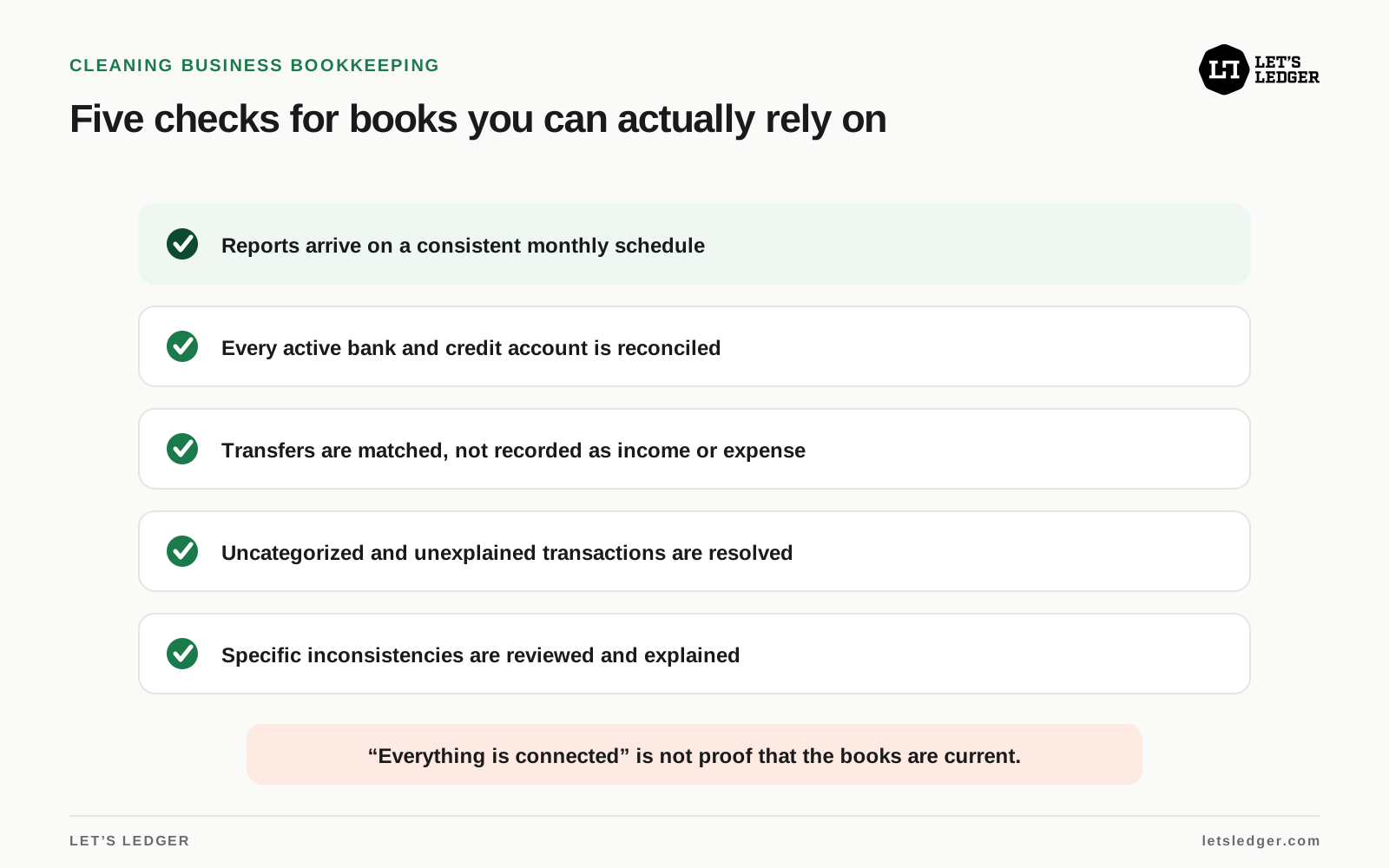
A practical test for calling books current has five parts:
- Reports arrive on a consistent monthly schedule.
- Every active bank and credit account is included and reconciled through the reporting date.
- Transfers are matched instead of being recorded as revenue or expenses.
- Uncategorized and unexplained transactions are resolved.
- Reports are reviewed for specific inconsistencies, such as duplicate activity, unexplained negative balances, an active account with no current activity, or a category that increases, decreases, or reverses direction without a business explanation.
You do not need to become an accountant to check the work. Ask which month was last reconciled for each account, then spot-check that the statement ending balances match the books. Look for old uncategorized items, unexplained negative balances, accounts that suddenly disappear, and balances that rise, fall, or switch from positive to negative without a clear reason. A bookkeeper should be able to explain the answers without sending you on a scavenger hunt through the software.
Ask your bookkeeper: “Which month is each account reconciled through?”
A clear answer: “Your checking account, savings account, and both credit cards are reconciled through June 30.”
A weak answer: “Everything is connected to the bank feed.”
Consistency is the clearest early warning sign. If reports arrive one month and disappear the next, the owner cannot rely on the numbers, even if each individual report looks polished.
Should a cleaning business bookkeeper do anything weekly?
Most cash-basis cleaning companies do not need fully closed books every week. They do benefit from fast operational signals and a process that prevents month-end cleanup from becoming a scramble.
Depending on the size and activity of the company, weekly work may include reviewing new transactions, resolving processor exceptions, monitoring overdue commercial invoices, checking cash, and flagging activity that does not match historical patterns while the details are still fresh. Larger companies may need more frequent review.
Weekly monitoring does not replace the monthly close. The monthly process still needs complete statements, reconciliations, balance-sheet support, and finalized reports.
What standard monthly bookkeeping usually does not include
The service agreement should state exactly what is included. Monthly bookkeeping normally covers recording, reconciling, reviewing, and reporting the financial activity. It does not automatically include:
- Running payroll
- Paying bills or managing approval workflows
- Filing income-tax or sales-tax returns
- Accrual accounting
- Detailed job costing
- Profitability by client or cleaning crew
- Cleaner utilization and scheduling analysis
- Custom forecasting or CFO advice
Some bookkeepers offer these services separately. The important point is to distinguish the bookkeeping foundation from operational reporting and tax work.
When DIY bookkeeping is reasonable
DIY bookkeeping is reasonable when the owner can stand behind the numbers: every account is included, reconciliations are completed monthly, activity that does not match the supporting records or historical patterns is resolved, and reports are produced consistently. The owner should also trust the results and be able to maintain the process without bookkeeping taking over time needed to run the business.
Downloading transactions and assigning categories is not enough. If the owner is doing the books, the same completeness, reconciliation, review, and reporting standards still apply.
When outsourcing becomes rational
Outside help becomes rational when the owner cannot keep up with the books every month, does not trust the reports, needs major cleanup before tax preparation, or is losing too much operating time to bookkeeping.
The decision is not based on a universal revenue threshold. Transaction volume, number of accounts, payroll, processors, invoicing, and the owner's time all matter. A cleaning company with several credit cards, multiple processors, and commercial invoices may need help sooner than a higher-revenue company with one bank account, one processor, and no invoicing.
How monthly bookkeeping works at Let’s Ledger
Our standard cash-basis monthly bookkeeping includes reconciliation, categorization, issue resolution, quality review, a clean Profit and Loss report, and a plain-English recap.
The goal is straightforward: the owner should know what the business made, spent, and kept without learning accounting software or supervising the bookkeeping process.
Want to see the finished output before speaking with anyone? Review the free example monthly report.
Frequently asked questions
Is categorizing imported bank transactions enough?
No. Categorization organizes transactions, but reconciliation tests whether the accounting records agree with the bank or credit-card statement. The account is not fully verified until the reconciliation is complete and unexplained differences are resolved.
Should technician wages be separated from office payroll?
Usually, yes. Technician wages directly support service delivery, while office and management payroll is overhead. Separating them makes the financial reports more useful. The exact account structure should fit the size of the company.
Should a bookkeeper track profitability by client?
Not automatically. Client-level profitability requires invoice, scheduling, crew time, travel, and service data that may not exist in the accounting system. It can be valuable, but it is normally operational or custom management reporting rather than basic bookkeeping.
What does the owner need to provide each month?
The owner should keep accounts connected, provide any statements that cannot be retrieved automatically, share necessary loan or processor records, and answer a small number of questions about transactions the bookkeeper cannot identify independently. Receipts may be needed when a merchant name does not explain what was purchased or when one purchase contains several types of items.
For a standard cash-basis cleaning business with organized records, answering the bookkeeper's questions should generally take about 10 to 15 minutes. The report review should leave the owner with a clear conclusion or decision, such as staying the course or investigating why a specific expense exceeded expectations.
Does this process apply to accrual-basis cleaning companies?
The principles still apply, but accrual accounting adds work around invoices, unpaid bills, accounts receivable, accounts payable, cutoff, and other period-end adjustments. This article focuses primarily on straightforward cash-basis monthly bookkeeping.
Michael Pirumov
Founder & Principal
Michael Pirumov is the Founder & Principal of Let’s Ledger. He has worked in accounting and finance operations since 2014 and holds an M.S. in Accounting from Baruch College. He focuses on helping owner-led businesses keep their books current and understand their monthly financials.
LinkedIn profile